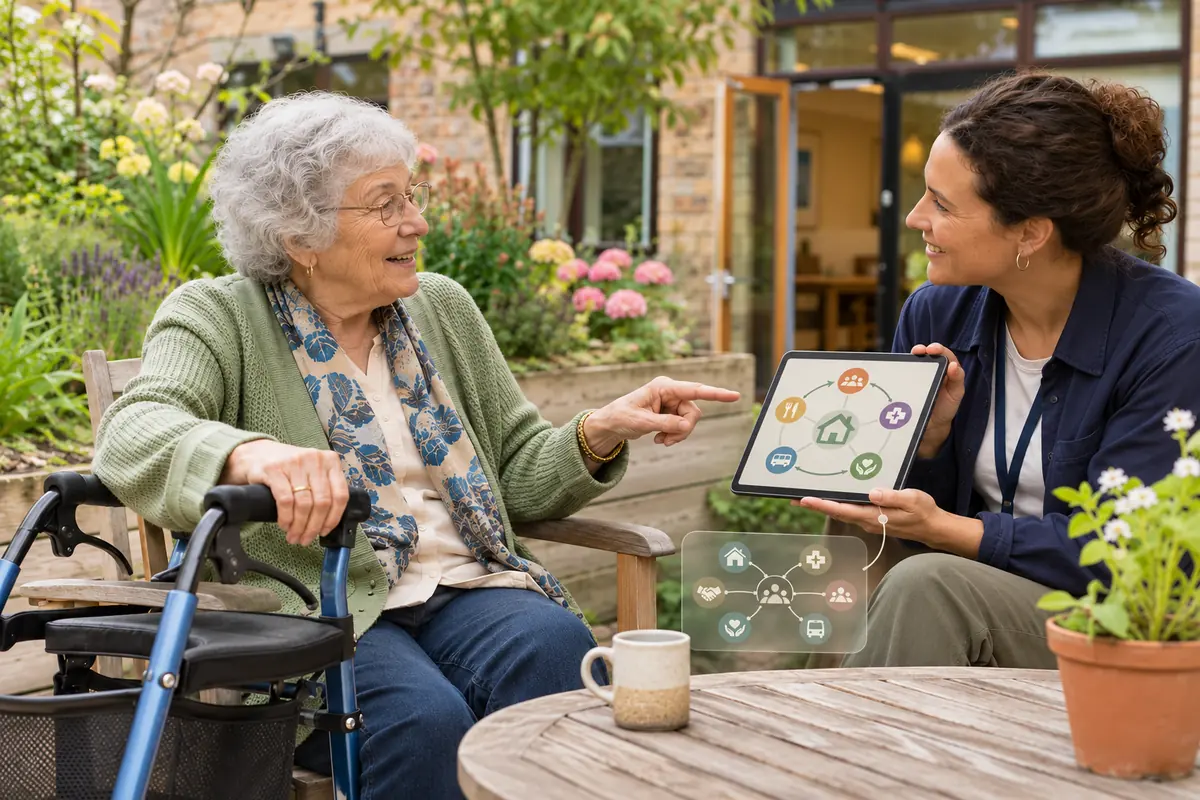
Older adults with disabilities
Continuity between rehabilitation, care at home and community support as needs change over time.
Japan partnership
Nightingale is developing a shared care platform to help professionals spot changing needs, connect providers and follow through on a plan shaped with each person. People and professionals decide what happens next.
For older adults and young adults with disabilities, across home, rehabilitation and community life.
Japan partnership
Exploring joint R&D for the Israel Innovation Authority / NEDO Globalstars Japan 2026 call.
Official call detailsRead the joint R&D briefThe idea
With permission, the platform would bring health, daily-life and support context together. A professional would review possible changes with the person and agree the next provider response.
Nightingale proposes a needs-and-goals record and specialist AI agents. Prediction models could flag changes; a generative copilot could draft source-linked options for professionals to review with the person. Providers would remain responsible for their services.
Bring permissioned medical, functional and social information into a longitudinal view, with its source and context.
Specialist agents would assemble source-linked context and draft options for social workers, nurses and physicians to review and approve.
Keep individual goals, preferences and observations central, with accessible digital or supported non-digital participation.
Who it supports
Two distinct care pathways. One shared principle: support should follow the person’s goals as life changes.
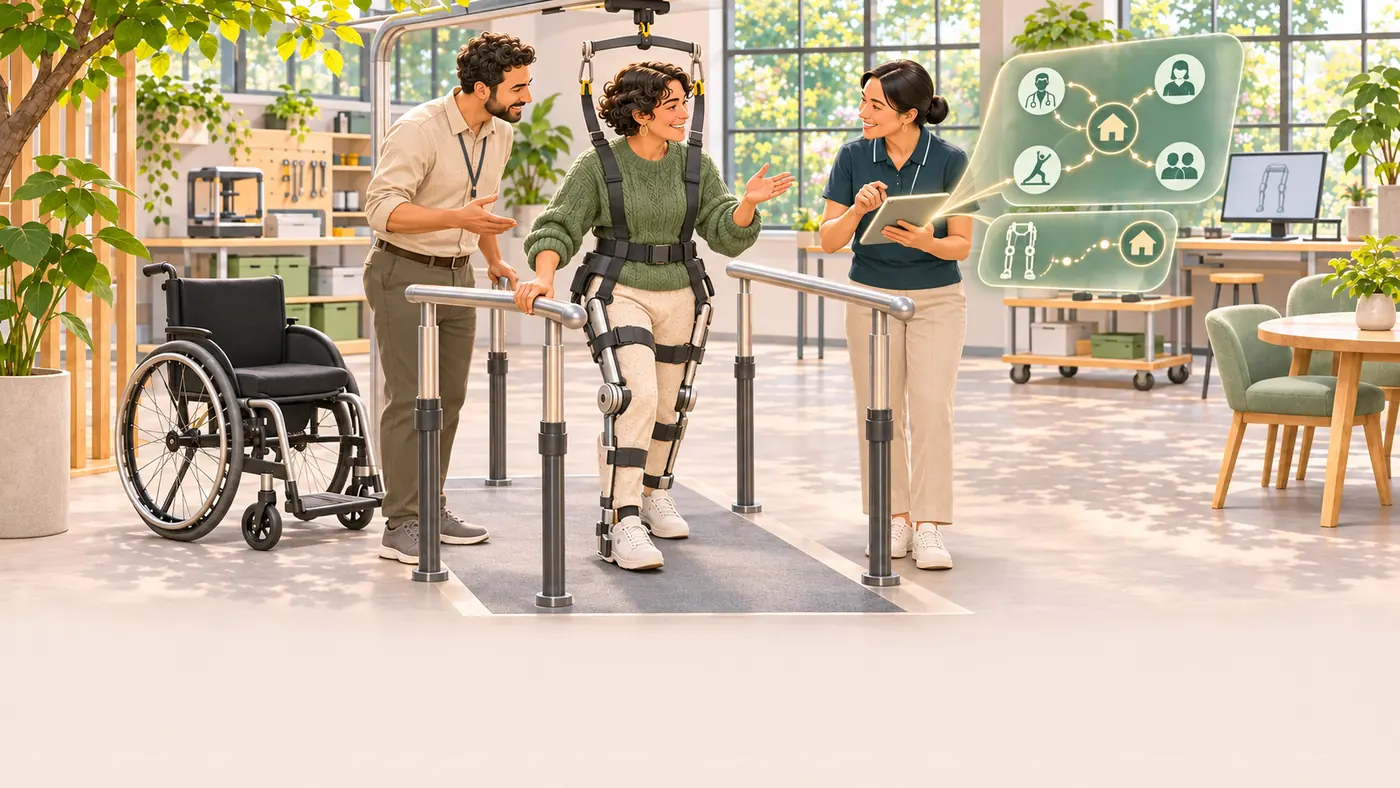
Continuity between rehabilitation, care at home and community support as needs change over time.
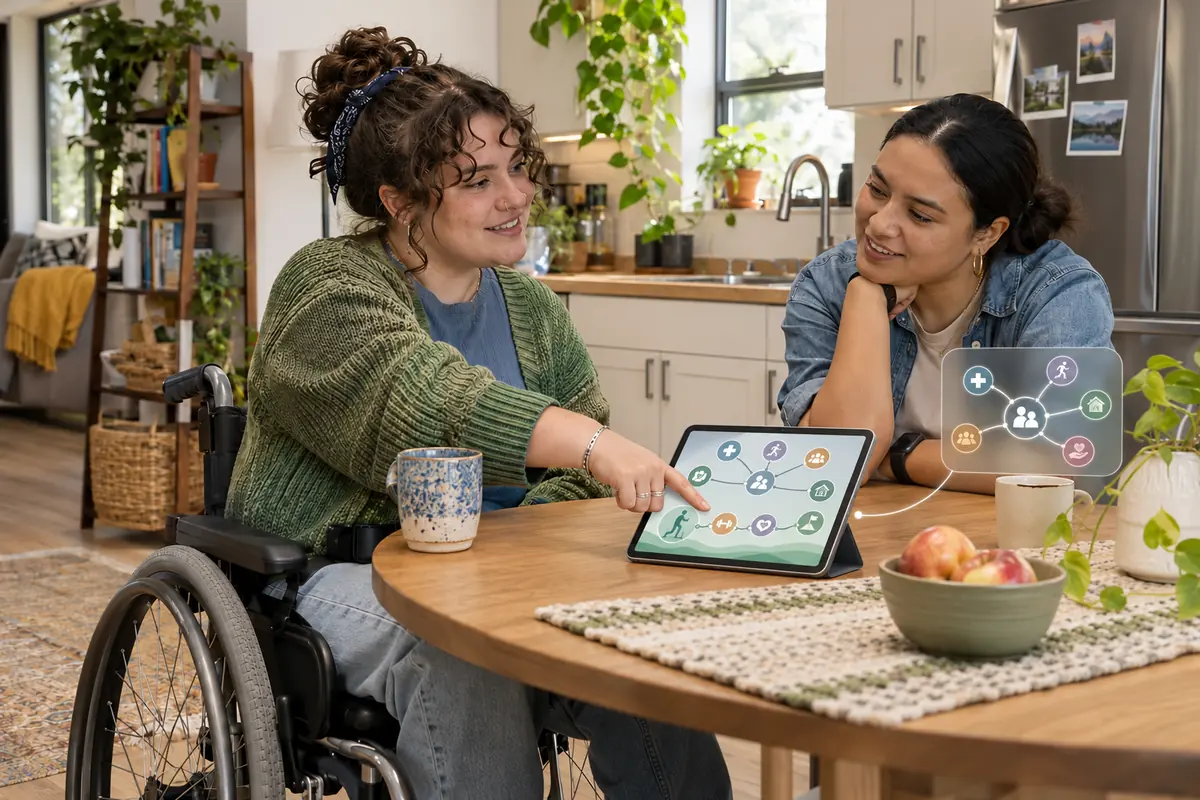
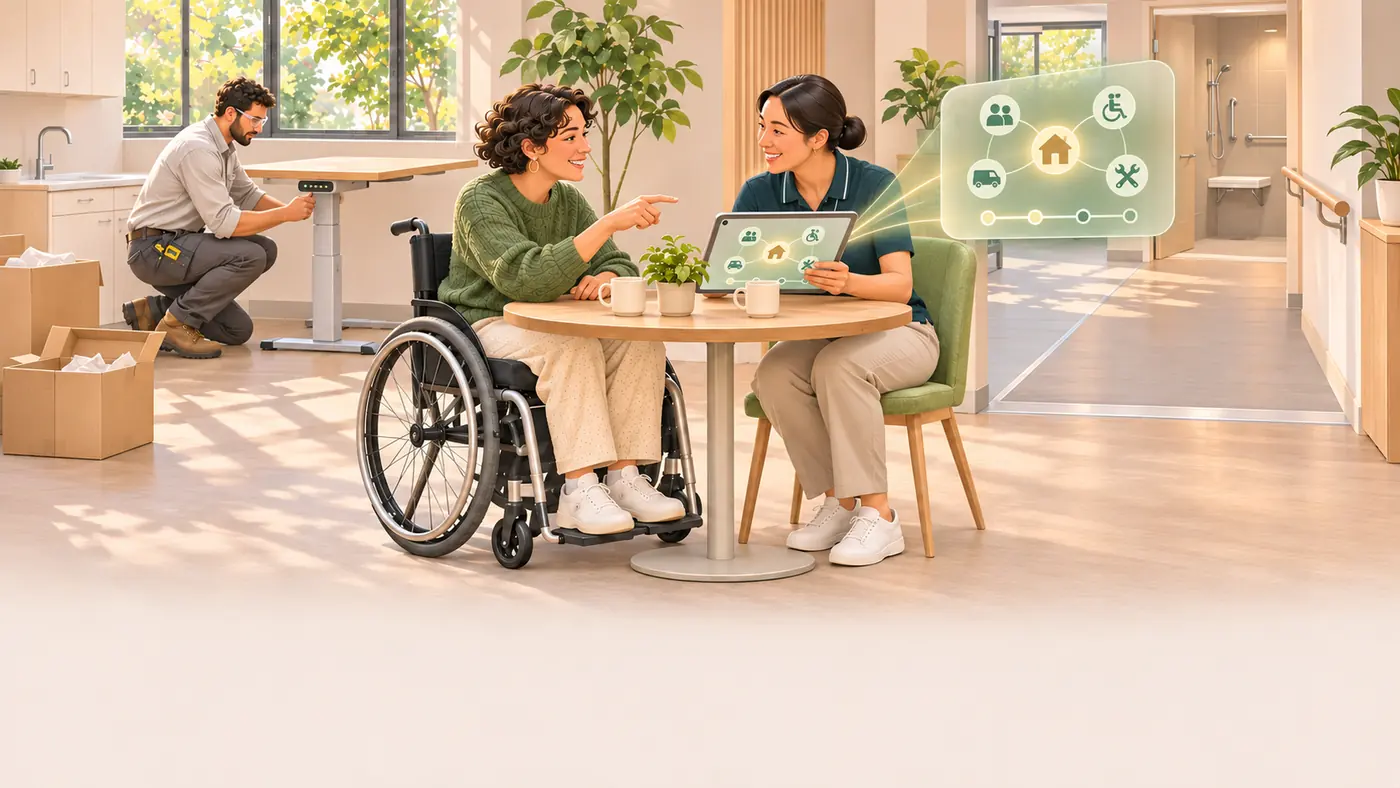
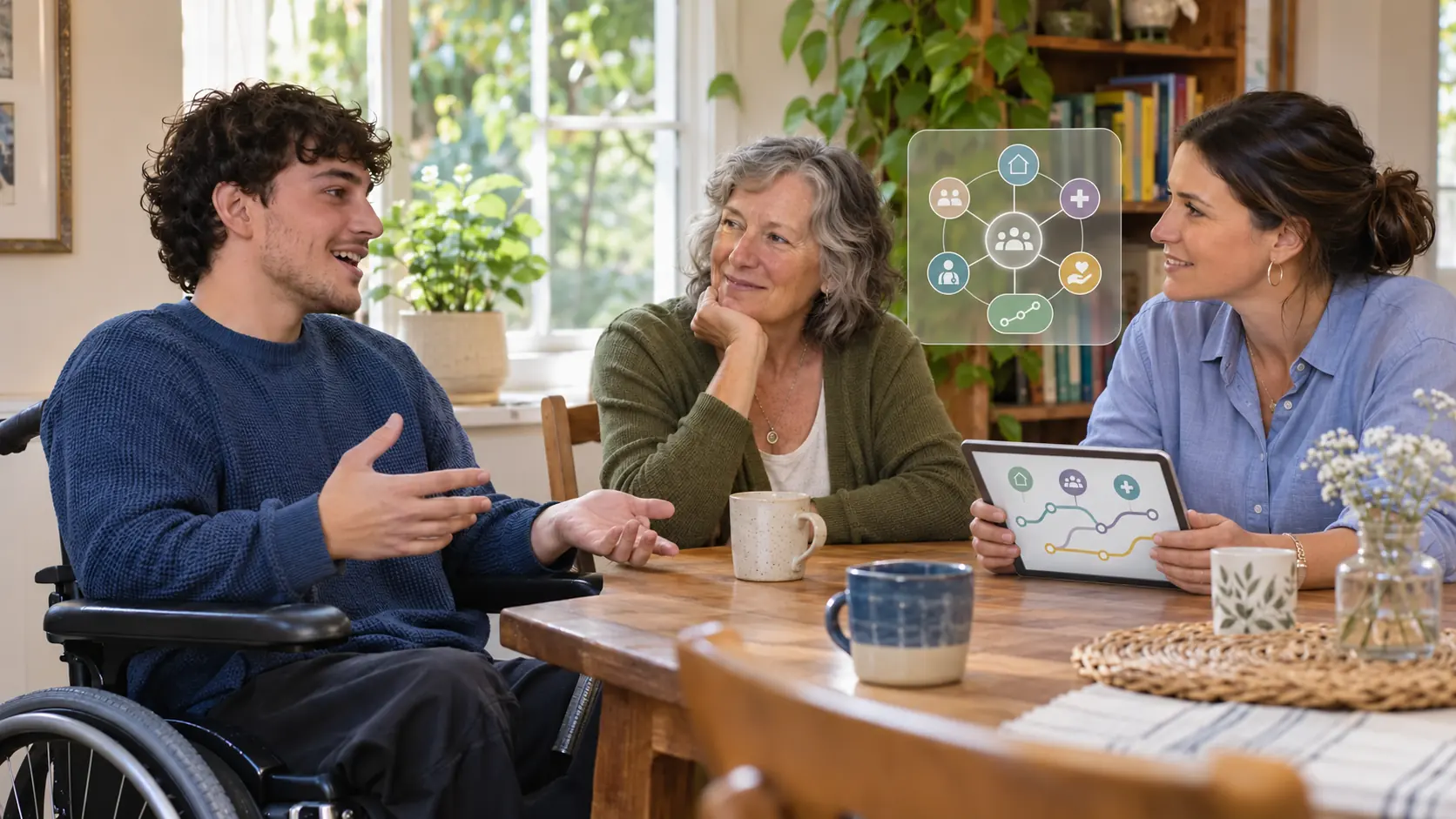
Continuity from youth services into adult support, independent living and participation, shaped around personal goals.
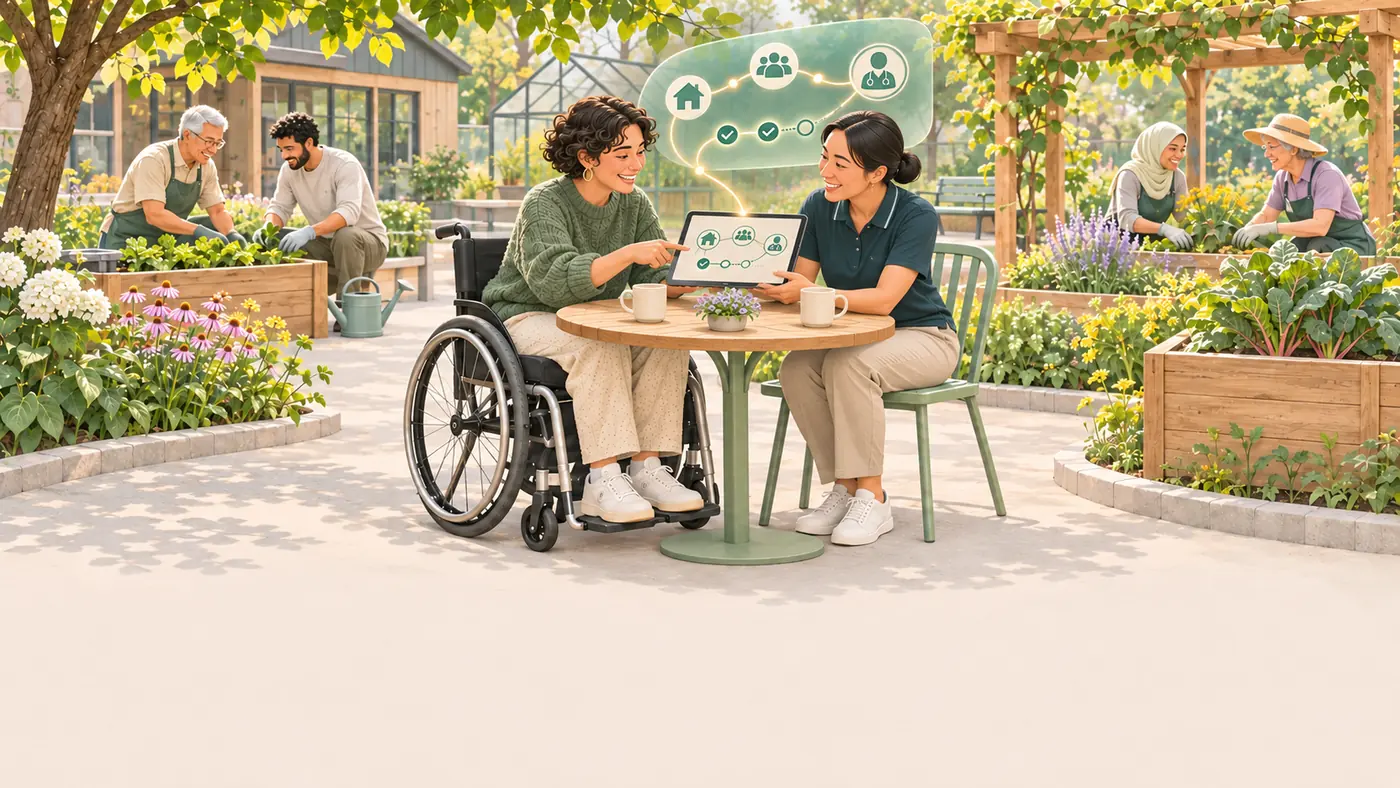
Imagery illustrates the proposed concept; it does not depict Nightingale users, staff or partners.
How it could work
One care manager could use a shared plan across settings. Agents may surface needs and draft options; the person and qualified professionals decide, and providers follow through on agreed actions.
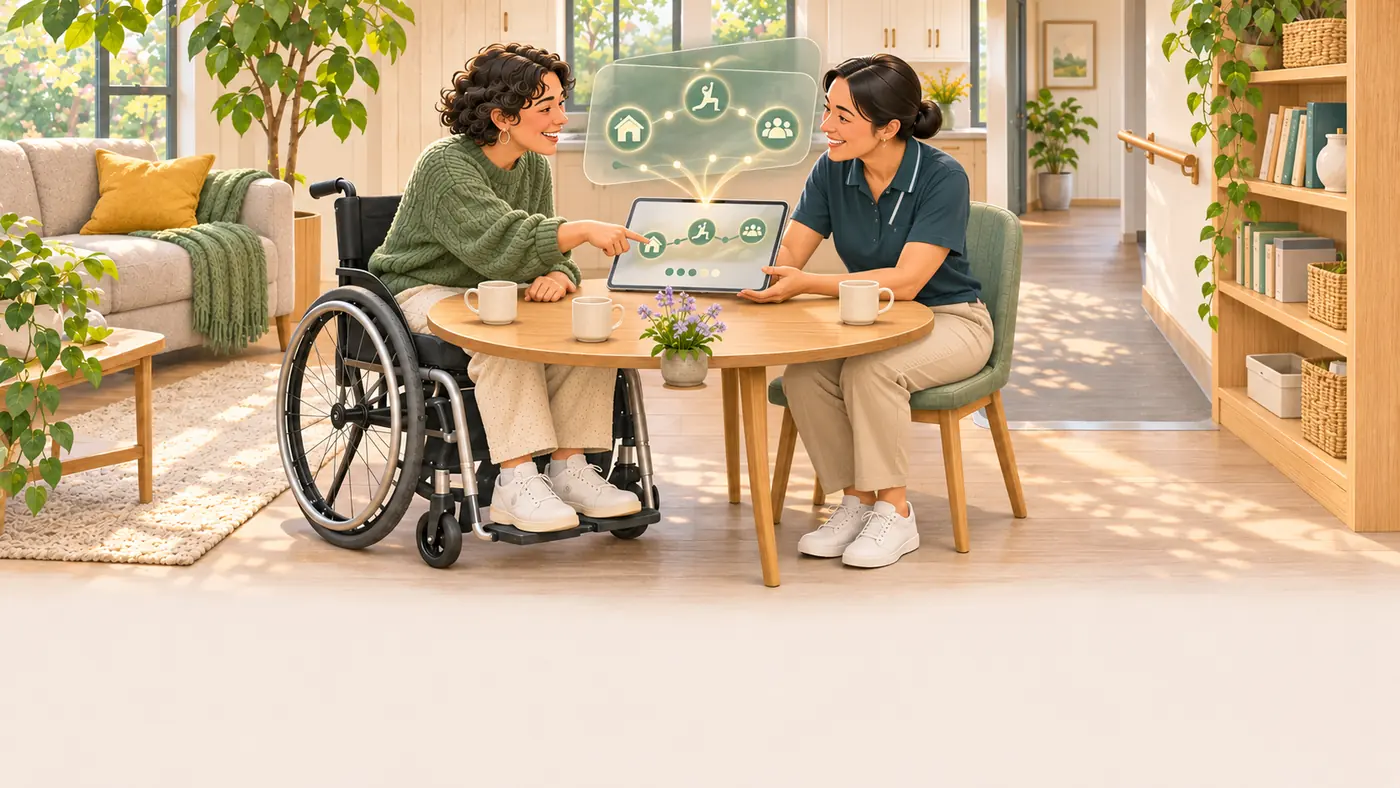
Care needs change over time. At home, Nightingale would help a care manager notice emerging needs with the person at the centre. In a rehabilitation research setting, specialist insight and AI agents could bring options together for professional review. As care moves home, the same manager would connect services, solutions and product providers around one shared plan. In the community, follow-through and feedback would guide the next conversation. Nightingale is a research concept for proactive, predictive long-term care, with people and professionals in control.
Step 01 / 04 · In focus
In this concept, the care manager uses a tablet to review permissioned medical, functional and social context with the person at home. The Needs agent brings possible changes into view; prediction remains a cue for professional judgment, never an automated care decision.
Person + care managerReview the context together
Select any stage to explore the proposed workflow in detail.
Illustrative pathway. Prediction and care outcomes still require evaluation.
Explore Nightingale PALI: personal learning, permissioned shared progress and the proof plan for lifelong care.
The platform model
The proposed B2B platform would connect long-term care providers around one plan, while each retains its service responsibilities.
Social workers, nurses, physicians, care coordinators, rehabilitation and support teams, together with people receiving care and their authorised supporters.
Proposed customers are provider organisations and integrated service networks. Potential budget holders include commissioners, municipalities and insurers; none is presented as a confirmed customer.
Current foundation and next steps
Current maturity: self-assessed TRL 5
HappySeniors / Nightingale brings the care-platform vision and care-management expertise. SynaptixLabs is the AI and development organisation.
Interactive care-workflow and form prototypes, a synthetic workflow simulator, and an operating agent execution platform.
Integrate the care pathway, develop prediction models and a professional copilot, adapt to care settings, and evaluate with partners. Japan localisation would be part of that work.
These care functions and outcomes have not been clinically validated.
Japan partnership
We seek a Japanese counterpart contributing substantial complementary technology: learning architectures, models, sensing or robotics. Together we would define joint R&D and care-led evaluation. Local relationships, localisation and adoption support this technical partnership.
Japanese partners and pilot sites are under discussion. Any joint R&D funding route is separate and subject to the official applicant rules.
Tell us your organisation, complementary technology, proposed joint research contribution and relevant care settings.
Discuss Japan collaborationOr write to contact@happyseniors.care
We are exploring joint R&D for the IIA–NEDO route around a substantial complementary technical contribution from Japan. The partners would define the work plan, integration and evaluation together; official applicant requirements remain a separate check.
Joint R&D partner brief (English PDF)
A funded joint R&D application requires Japanese applicants to meet the official NEDO requirements. Commercial introduction and adoption partnerships do not by themselves establish grant eligibility.